
View Newsletter Archive

Volume 2, Number 2  |  SPRING 2009

Only a few more days to register for the
2009 Aclara Client Conference!

The two hottest topics in the industry, the Stimulus Bill’s impact on utility project funding and the deployment of the nation’s Smart Grid, will be addressed in the conference’s keynote by smart-grid thought leader Jesse Berst.

The conference will also offer insight on:

Click here to view the latest agenda and to register.

The Aclara Client Conference attracts hundreds of knowledgeable professionals from across the country and around the world. Join your colleagues and Aclara personnel for technical sessions, industry updates, networking functions, and social events.

Last Chance to Register for the 2009 Aclara Client Conference!

Measuring the Value of Water

City of Tallahassee Utility Company Selects Aclara Software Applications for Meter Data Management

Southwestern Electric Cooperative Combines Aclara and SCADA for AMR Visualization

Recent Contracts

You can catch a lot with Aclara... including largemouth bass!

Sue McCormick //
Water Utilities Director

Wendy Welser //
Manager, Customer Services

AMR Supports Cost-of-Service Rates in
Ann Arbor, MI

The college town of Ann Arbor, Mich., home to the University of Michigan and well known for Wolverine football, is also home to a state-of-the-art water system that offers its 114,000 residents cost-of-service rates that are supported by automated meter reading (AMR). Ann Arbor’s holistic approach considers how water, storm water and wastewater operations interact to affect the functioning of the system as a whole. This basic approach has resulted in leading-edge improvements that have benefited customers.

Ann Arbor looks at all options for serving its residents through robust citizen engagement efforts and has been successful in finding creative solutions to problems. For example, when storm water was flooding the city’s sanitary collection system and aging wastewater treatment plant during big storms, the city began a project to disconnect footing drains that were emptying into the sanitary sewer to solve the problem, rather than expand wastewater treatment and collection facilities at great expense to and with significant environmental impact on the community. Community support was critical to this solution, which was largely accomplished by doing work in residents’ homes.

Ann Arbor has taken the same creative approach to solving problems related to water supply. Ann Arbor is a rarity in Michigan—a city with no easy access to the Great Lakes. Limited river water capacity means the city relies on remote well fields for additional water because its local groundwater resources are not plentiful or well protected. These issues made the potential for managing demand on the system and living within existing capacity the most prudent approaches to water supply problems. In addition, if new investments had to be made to meet maximum-day demands, those costs should be assigned to the appropriate users. The city uses both cost-of-service programs and AMR to supports its efforts in this arena.

Cost-of-service options

In Ann Arbor, cost-of-service programs were undertaken to assure equity in assignment of costs for current as well as any future expansion of facilities. The Ann Arbor Council further directed, as a matter of policy, that the rates should promote conservation.

In the late 1990s, it was clear that Ann Arbor’s water system was reaching a critical decision point. The system was operating close to 80% capacity at peak loads—a point that would trigger systems planning and potential significant immediate investment in new infrastructure to increase capacity. The city had to find ways to encourage changes in peak use patterns, assign costs to customers fairly and roll out investments in water infrastructure to residents in an equitable way.

The city has tackled the problem through cost-of-service rate structures for both residential and commercial customers. Cost of service is a method of developing rates that considers customer use characteristics and the various investments in the system that support those characteristics. Ultimately, Ann Arbor’s cost-of-service rate structures allow it to distribute the costs of developing and maintaining the water system more fairly.

In Ann Arbor, residential customers are charged on an inclining rate structure. To develop the tiers that comprise the structure, the utility took quarterly bills, plotted them on a bell-shaped curve, ran the numbers through a unit-cost recovery calculation and came up with four rates for charging water costs. Customers pay the lowest rate to use of one to seven units of water, and rates progressively increase in each block as more water is used. The highest rate per unit is paid once a customer uses 45 units of water or more.

Commercial customers also pay based on a cost-of-service rate structure. However, this structure works a bit differently than the residential one. Because there are fewer of them, the city is able to analyze the water use characteristics of each individual commercial customer and assign a rate class based on historic water use. Once assigned a rate class, a commercial customer pays the same rate for all water units used for a year.

A key component of the calculations used to determine commercial rate-class assignations is a peaking factor, or the ratio of peak to average water use. Peaking factor makes it possible to assign rates that take into account the costs of providing the infrastructure necessary to support peak usage. This means the customer that uses water consistently over time will pay less for each individual water unit used than the customer that uses a lot of water for a few events and little water over the rest of the year. For example, the University of Michigan football stadium uses millions of gallons of water during the course of nine single-day events a year. The stadium peaking factor is higher than that of most other facilities, such as campus dormitories, that account for more consistent water use.

The city utilizes a six-year financial plan for each of its water utilities in order to evaluate changes in capital investment, operating expenses and use projections to plan for changing revenue requirements. This approach has allowed Ann Arbor to propose rate adjustments that are distributed in a level way across several years, thus avoiding rate shock and allowing for development of fund balances to pay for needed improvements.

Recently, the city used $28 million of the sewer fund balance to pay for part of a $42-million plant project (the rest of the cost was covered by bonds). This type of project would be extremely hard to fund without the preplanning inherent in Ann Arbor’s approach.

How AMR fits in

Although Ann Arbor rolled out its AMR system after implementing the initial cost-of-service programs, the technology has served to support and enhance the programs. Ann Arbor began deploying the STAR® Network system from Aclara in 2004, about a year after it first implemented its residential cost-of service program. The STAR Network system automatically reads most water meters on a twice-daily basis, though some are read more frequently, sending the readings directly to the utility via a series of data collectors located throughout the service area. Previously, Ann Arbor took water meter readings quarterly.

The city uses the regular water meter readings provided by AMR to help people understand how they are using water, as they are using it. Previously, customers would get a bill at the end of a quarter but have no idea what their usage pattern was. Therefore, even though they would be charged based on usage, there was little customers could do to modify their usage patterns, and thus billed amount, during a billing cycle.

Today, Ann Arbor uses its AMR data to provide customers with real-time consumption readings online. Customers can log on to the city’s website at any time, see their usage and gauge how much their bills will be at the end of the current cycle if their usage patterns remain the same. This type of feedback can help customers make decisions about how they want to use water. It can also help them understand the effect that specific types of usage, have on a bill.

The city hopes to eventually do predictive analysis based on usage patterns that will allow it to better optimize its water system. This type of analysis requires a large amount of data collected over a number of years. So far, Ann Arbor has seen some change in water usage patterns based on feedback to customers, but the city does not have enough information to know whether these patterns will hold during the worst conditions, for instance drought.

AMR data may also help Ann Arbor refine its residential cost-of-service rates. Today, rates are based on a distribution of all residential billing data across a bell curve. This approach does not take into account the peaking factor for individual accounts. In the future, with improvements in ability to mine the AMR data, the city may be able to utilize the peak usage of individual residential customers in the same way that peak factor is used to determine rates of commercial customers. This approach might lower rates for residential customers who use larger amounts of water over time but whose peaking factors are low (i.e., large families). Conversely, it might raise rates for the gardener who irrigates profusely during a few weeks in the summer.

Its holistic approach to water utility requirements has allowed Ann Arbor to anticipate infrastructure needs as well as maximize the benefits of AMR for its citizens. Through cost-of-service programs and creative use of technology, the city will continue to refine how it distributes costs to customers based on peak usage and see the benefits as customers respond to the value and cost of water.

Source: Water & Wastes Digest | February 2009 | Volume: 49 | Number: 2
Copyright © 2009 Scranton Gillette Communications

To Top

Click thumbnail to enlarge

Click thumbnail to enlarge

City of Tallahassee Utility Company Selects Aclara Software Applications for Meter Data Management

The utility company of the City of Tallahassee is implementing meter-data-management (MDM) and customer-care solutions from leading intelligent-infrastructure brand Aclara to manage both daily and interval meter data and to provide customer communications. The contract with Tallahassee, Florida’s capitol and the home of Florida State and Florida A&M universities, provides software licenses and maintenance for more than 240,000 electric, water and gas meter devices.  Aclara will partner with Honeywell Utility Solutions, the project’s prime contractor, to implement the City’s systems.

The Aclara Software Meter Data Management System (MDMS) and Aclara Software ENERGYprism® were among the applications chosen by Tallahassee, Honeywell, and Honeywell’s utility consulting firm Enspiria Solutions to support the City’s advanced-metering-infrastructure (AMI). Additional Aclara solutions will perform advanced load forecasting, revenue-assurance assessment, and AMI-enabled load and rate analysis.

The utility companies and their customers should begin seeing operational benefits from the project’s advanced MDM functions starting as early as this summer. For example, the MDMS will allow Tallahassee’s electric utility to intelligently filter and throttle messages from the AMI system to more quickly identify the source of the outage, and intelligently route messages to and from its outage-management system.

Working with Tallahassee’s AMI system, Elster’s EnergyAxis® System, the MDMS will facilitate demand-response and price-responsive rate programs to encourage customers to conserve electricity, gas, and water. Plus, the MDMS will allow Tallahassee to offer pro-active, personalized alerts through communication devices such as e-mail, telephone, and in-home displays. Alerts will inform customers about bill-to-date, critical peak, and other customer-related data.

The ENERGYprism applications will let customers view and analyze through the web how they are using electricity, gas, and water. In addition, the application allows customers to analyze their bills, compares a home’s resource consumption to that of similar homes in the neighborhood, and offers personalized conservation recommendations tied to specific dollar savings. Tallahassee’s contact-center representatives will use an ENERGYprism user interface tailored specifically to help agents use the AMI data to more effectively resolve customer inquiries.

“In addition to customer analytics, the Aclara solutions will empower customers and help them understand how they are using resources,” said Reese Goad, utility director for Tallahassee. “We can unlock the value of advanced metering data with on-line tools that allow our citizens to view their electric usage hourly and gas and water usage daily.”

The city’s commitment to Aclara’s MDMS and customer-service applications is an indication that these solutions, becoming common in larger investor-owned utilities, can also add comparable business benefit to municipals and cooperatives as well as their customers.

“At Aclara we believe that successful resource-conservation efforts will hinge on the availability of information to utilities and customers that is both understandable and actionable,” said Dave Zabetakis, General Manager of Aclara Software. “In this regard, Aclara offers a wide range of applications to gas, water, and electric utilities that allow them to understand how resources are being used and deployed.”

To Top

Southwestern Electric Cooperative Combines
Aclara and SCADA for AMR Visualization

Powering the system with the right tools

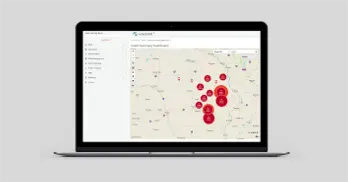
Southwestern Electric Cooperative, based in Greenville, Illinois is empowering itself with the tools needed to determine when and where a power outage occurs. Southwestern Electric’s current system combines the power of an Aclara TWACS® AMI system with an innovative application called AMR Visualization from a SCADA vendor, C3-ilex. AMR Visualization uses the information from the SCADA system to quickly detect events indicative of a power outage, such as a breaker trip.

Communicating within seconds

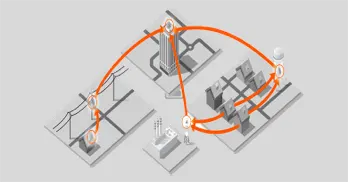
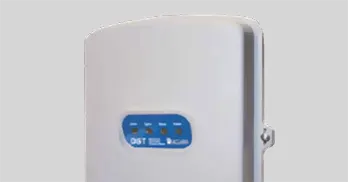
The AMR Visualization begins communicating with the TWACS® AMI system within seconds of an outage. Using MultiSpeak®, the system begins to request a status check from bellwether AMI units on the feeder with the possible fault. Bellwether AMI Units are stand-alone TWACS® AMR transceivers packaged in weather-proof enclosures and placed at critical points on each feeder.

These AMR transceivers are left unattached from the revenue meters for three reasons:

  1. They can be pinged frequently without the risk of exceeding their thermal limits;
  2. They can be pinged at any time and will respond immediately; and
  3. They are not subject to movement, connection or disconnection, of normal revenue meters.

As the bellwether AMI units respond to the status checks, the events are reported to the SCADA system within one minute.  The SCADA system immediately displays and alarms of the outages. Within 90 seconds of the fault event, the SCADA system has positive confirmation of a probable outage or confirmation the fault has been cleared.

Locating the outage

With confirmation from the SCADA system, the next step is to determine the location of the outage. The C3-ilex SCADA system displays the outage locations on a system map imported from a GIS system. If necessary, the cooperative’s dispatcher can ping the revenue meters in order to further localize an outage. Even if the dispatch center is unmanned, the SCADA system can notify off-duty personnel of an outage via text message.

Southwestern Electric Cooperative employs Aclara software solutions such as TWACS Net Server and OPTIMUM™ Web service integration to access and communicate AMI data. The co-op also uses TWACS PROasys™ to proactively send an alarm to an outage management system (OMS), and the SCADA system if a meter does not respond during normal AMR messaging or from a periodic ping.

Continuing to grow the system

“The AMR Visualization application is up and running for us,” says John Graminski, director of information technology for Southwestern Electric Cooperative. “But, there is still a lot of work to do. We are implementing portions of the system tools to gauge the resulting reductions in outage durations.”

Southwestern Electric is planning an upgrade to the AMR Visualization and MultiSpeak interface offered by C3-ilex and Aclara which will retrieve voltages from selected meters.  This will enable Southwestern Electric to monitor and alarm end-of-line voltages.

To Top

Recent Contracts

Aclara’s recent awarded contracts highlight our proven and reliable technologies and our suite of solutions for every application.

  • Atchison Holt Electric Cooperative in Missouri has selected TWACS technology as their AMI solution provider. The contract includes 4,410 electric meters.
  • The city of Carmel, IN has selected the Aclara STAR® Network for an AMI pilot project for 17,500 water meters. The project began in February of 2009 and is expected to complete in January 2011.
  • The Carroll Electric Coop in Arkansas has approved a project which will outfit 87,000 electric meters with Aclara TWACS technology as their AMI solution.
  • Memphis Light, Gas and Water Division (MLGW) signed an agreement with Aclara Software to add water functionality and Bill Prism to their existing application.
  • Aclara Software added the carbon module to the NV Energy (northern and southern territories), The United Illuminating Company, and PPL Electric Utilities.
  • Aclara TWACS technology will provide AMR for Pemiscot-Dunklin Electric Cooperative in Missouri. Installation of 6200 UMTs began in February 2009 and will complete in May 2010.
  • Pepco Holdings, Inc. extended their current agreement for Aclara Software’s ENERGYprism® applications and signed an additional contract to implement the Load and Rate Analysis module on their web site and in the call center. They will also be adding the carbon module.
  • Aclara TWACS technology will provide AMR solutions for Southeast Colorado Power covering 9,000 electric meters and 17 substations. The installation process will run from May 2009 through May 2011.
  • The Toho Water Authority has selected the Aclara STAR Network as their AMI solution. This contract includes 102,000 water meters.
  • In February 2009, the Truckee Donner Water District, in California began installation of the Aclara STAR Network as the AMI solution for its 13,000 water meters and 13,000l electric meters. Installation is scheduled to complete in January 2011.
  • Aclara TWACS technology will provide AMI solutions for Valley Rural Electric Cooperative in Pennsylvania.

Whoops!!!

In our last newsletter we listed a new contract with Elkhorn RPPD located in Indiana. Elkhorn RPPD is actually located in Nebraska. We apologize for the error. Elkhorn RPPD selected Aclara TWACS technology as the AMI solution for its 7,200 residential electric meters. Installation is scheduled to complete in February 2012.

To Top

You can catch a lot with Aclara...

Michael A. Wood, manager of engineering at South River Electric Membership Corporation caught this largemouth bass using the Aclara Rapala Shad Rap he received from his sales representative, Tina Roncalli.

To Top